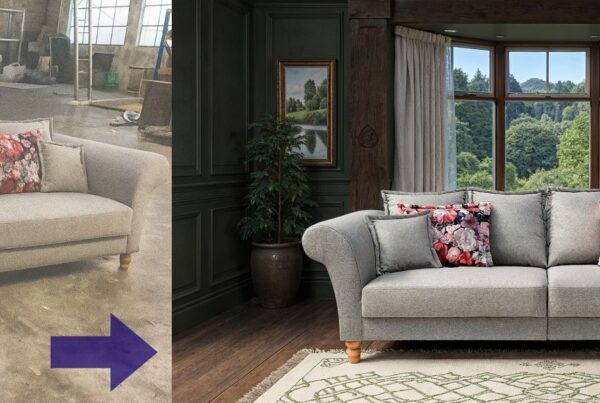


The furniture industry has always relied heavily on visual presentation. From showroom displays to lifestyle photography, brands have traditionally focused on helping customers imagine how a product might look in their space. However, as eCommerce continues to grow, static images are no longer enough to meet modern expectations.
Today’s customers want more certainty before making a purchase. They want to understand scale, proportions, colours and how a piece of furniture fits into their environment. This is where are reshaping the industry.
Augmented Reality in der Möbelbranche https://mazingxr.com/ar-fuer-einrichtung/ bietet eine neue Art der Produktpräsentation. Anstatt Kunden zu bitten, sich etwas vorzustellen, können Marken ihnen nun ermöglichen, Möbel direkt in ihrem eigenen Raum zu visualisieren. Dieser Wandel verringert Unsicherheiten, verbessert die Entscheidungsfindung und schafft ein ansprechenderes Einkaufserlebnis.
Benefits of augmented reality in furniture
One of the main challenges in furniture eCommerce is hesitation. Customers often delay purchases because they are unsure whether a product will fit their space, match their interior or meet expectations in real life.
The benefits of augmented reality in furniture directly address this problem by giving customers a realistic and interactive way to evaluate products before buying.
With AR, customers can place furniture in their room using their smartphone camera, see how it fits and move it around to explore different positions. This creates a much clearer understanding of the product compared to static images.
From a business perspective, this leads to measurable improvements. Brands using AR often see higher engagement, longer time spent on product pages and improved conversion rates. At the same time, return rates decrease because customers make more informed decisions.
Some of the most impactful benefits include:
- increased confidence in purchase decisions
- reduced product returns due to better visualisation
- higher engagement with product pages
- stronger differentiation from competitors
These advantages make AR not just a visual enhancement, but a practical tool for improving both customer experience and business performance.
Augmented reality furniture design and product presentation
Beyond sales, augmented reality furniture design is changing how products are developed and presented. Designers and manufacturers can now create digital versions of furniture that can be tested and visualised before production.
This allows for faster iteration and more flexibility in design. Instead of relying solely on physical prototypes, teams can explore different materials, finishes and configurations digitally.
For customers, this translates into a more interactive experience. They can explore variations of a product, switch colours or materials and see updates instantly. This level of customisation helps bridge the gap between design and purchase.
It also improves how collections are presented online. Rather than displaying multiple static images, brands can offer a dynamic experience where customers interact with the product directly.
This approach is particularly valuable for furniture, where details such as texture, size and proportion play a critical role in decision-making.
Augmented reality furniture viewer: bringing products into real environments
A key component of this transformation is the augmented reality furniture viewer. This technology allows customers to place 3D models of furniture into their real environment through a web browser, without the need for additional applications.
This simplicity is important. Customers can access the experience instantly, which removes friction and increases adoption. Instead of downloading an app, they can interact with products directly from the product page.
The viewer ensures that furniture is displayed at true scale, allowing customers to accurately assess how it fits within their space. They can move around the item, view it from different angles and see how it interacts with existing elements such as walls, lighting and other furniture.
From a business perspective, this creates a more immersive and practical product experience. It turns a passive browsing session into an interactive exploration, which significantly increases engagement.
It also provides valuable insights. Brands can track how often products are placed in real environments and use this data to understand customer behaviour and preferences.
Augmented reality furniture shopping: redefining the online buying journey
The impact of augmented reality furniture shopping extends beyond individual features. It fundamentally changes how customers interact with products throughout the buying journey.
Instead of moving between product images, dimensions and descriptions, customers can directly visualise how a product fits into their life. This reduces the gap between online browsing and real-world experience.
For many customers, this removes one of the biggest barriers to online furniture shopping: uncertainty. Being able to see a product in their own space provides reassurance and makes the decision process more straightforward.
At the same time, AR introduces a more emotional element to shopping. Customers are not just evaluating a product, they are experiencing it. They can imagine how a sofa fits into their living room or how a table complements their dining area.
This emotional connection plays an important role in purchasing decisions. When customers can visualise a product as part of their environment, they are more likely to move forward with a purchase.
From a business perspective, this leads to:
- higher conversion rates as hesitation decreases
- more confident purchasing decisions
- improved customer satisfaction
- stronger brand perception
By enhancing both the practical and emotional aspects of shopping, AR creates a more effective and engaging buying experience.
Why augmented reality in furniture industry is becoming a standard
As customer expectations continue to evolve, technologies that once felt innovative are quickly becoming standard. Augmented reality in furniture industry is moving in this direction.
Consumers are increasingly familiar with interactive experiences and expect brands to provide tools that help them make better decisions. Static images alone are no longer sufficient, especially for products like furniture where scale and context are critical.
At the same time, the technology has become more accessible. Web-based AR solutions allow brands to integrate these experiences without requiring complex infrastructure or additional applications.
This accessibility makes it easier for both large and small businesses to adopt AR. Whether a company is a manufacturer, retailer or eCommerce brand, it can implement AR to improve product presentation and customer experience.
The role of AR in reducing returns and improving efficiency
Returns are a significant challenge in furniture eCommerce. Products that do not meet expectations or do not fit the intended space often result in costly returns.
By enabling customers to visualise products accurately, AR helps reduce these issues. Customers are more likely to choose the right product the first time, which improves satisfaction and reduces operational costs.
This has a direct impact on efficiency. Fewer returns mean lower logistics costs, less time spent managing returns and a more streamlined sales process.
At the same time, AR supports better communication between brands and customers. Instead of relying on descriptions or measurements alone, customers can see exactly what they are buying.
How brands can implement augmented reality furniture solutions
Adopting AR does not require a complete overhaul of existing systems. Modern solutions allow brands to integrate AR directly into their websites and product pages.
Typically, the process involves creating 3D models of products and making them available through a web-based viewer. These models can be generated from images or existing assets, making the process more scalable.
Once integrated, AR becomes a natural part of the customer journey. Users can activate the feature directly from the product page and start interacting with the product immediately.
For brands, this means:
- minimal friction for customers
- seamless integration into existing eCommerce platforms
- scalable content management for large product catalogues
- measurable impact on engagement and conversions
By integrating AR in a structured way, organisations can enhance their online presence without disrupting existing workflows.
Conclusion
The shift towards digital commerce has created new challenges for the furniture industry, particularly when it comes to helping customers make confident purchasing decisions. Augmented reality in furniture industry addresses these challenges by providing a more interactive and realistic way to explore products.
Through the benefits of augmented reality in furniture, brands can reduce uncertainty, improve engagement and increase conversions. At the same time, innovations in augmented reality furniture design and the use of an augmented reality furniture viewer are transforming how products are presented and experienced.
Most importantly, augmented reality furniture shopping is redefining the relationship between customers and products. It bridges the gap between online and offline experiences, creating a more intuitive and engaging way to shop.
As technology continues to evolve, AR is no longer just an added feature. It is becoming an essential part of how furniture is marketed, explored and purchased in the digital age.