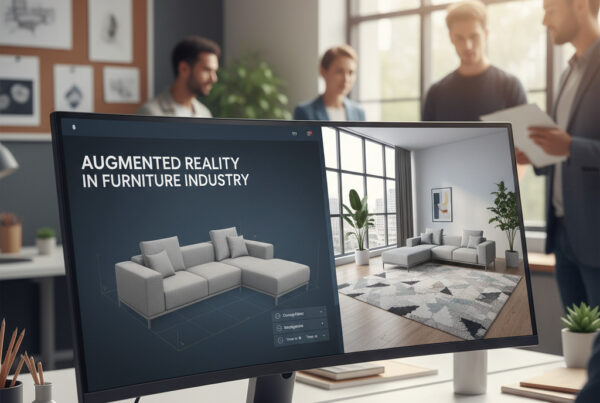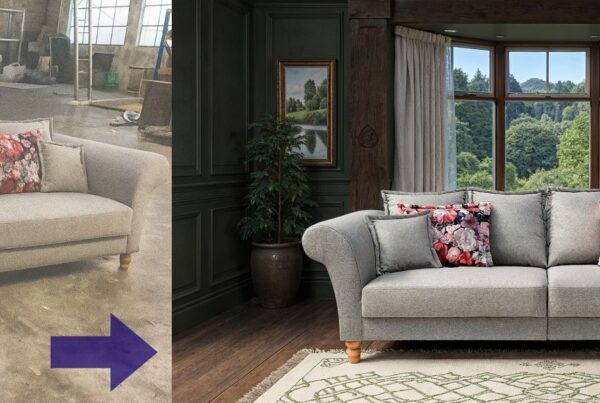

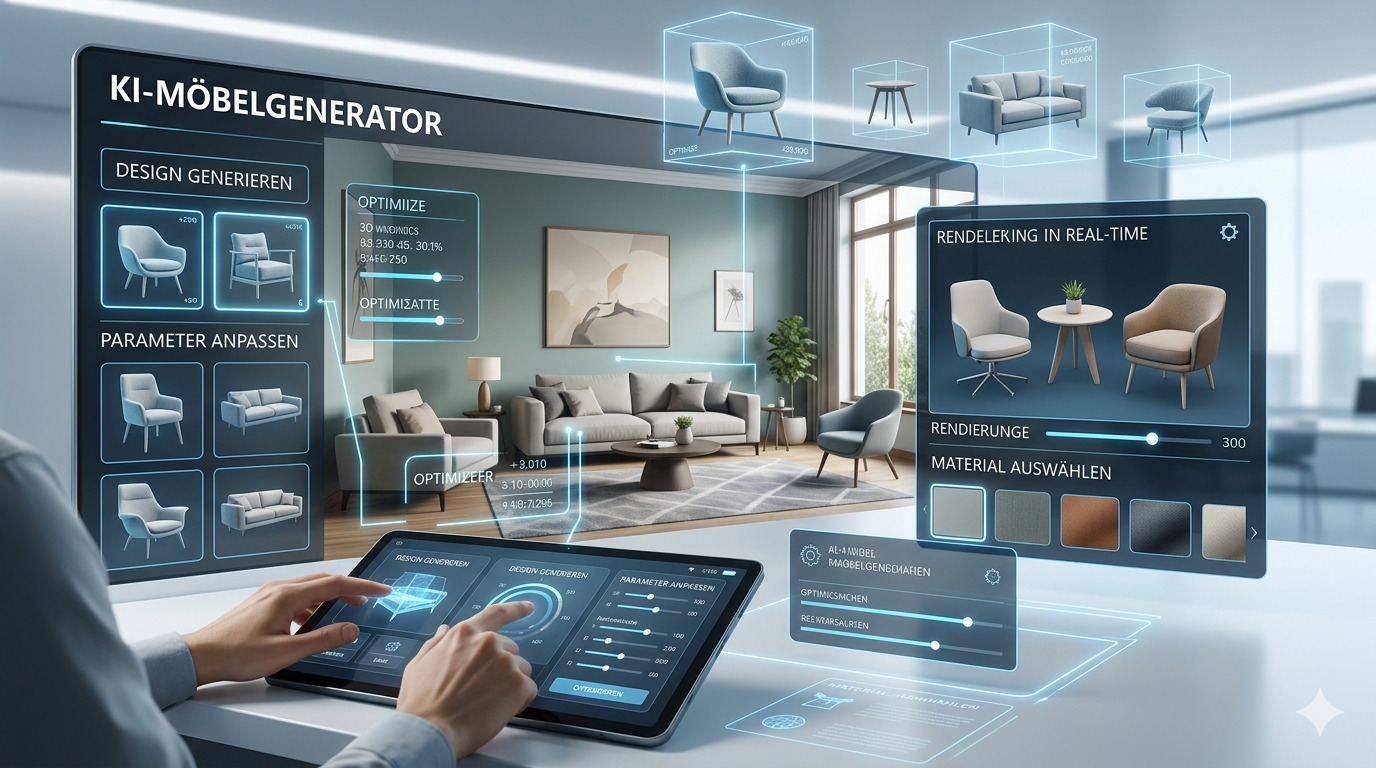
The furniture industry is undergoing a major shift as digital tools become more advanced and accessible. What once required physical prototypes, design iterations and staged photography can now be achieved through intelligent systems that generate, visualise and adapt products in real time.
With solutions like Mazing, brands and retailers can use an ai furniture generator to create realistic visuals, explore design variations and present products in ways that were previously difficult or expensive to achieve.
This technology is not just about automation. It changes how furniture is conceptualised, how customers interact with products and how businesses scale visual content across large catalogues.
AI for furniture design: accelerating creativity and production
Design has always been at the core of the furniture industry. However, traditional design processes often involve multiple stages, from sketching and prototyping to testing and refinement. This can be time-consuming and resource-intensive.
Ai for furniture design introduces a more flexible approach. Designers can generate variations of products quickly, experiment with materials, colours and shapes, and visualise results without creating physical samples.
This significantly speeds up the development process. Instead of waiting for prototypes, teams can evaluate designs digitally and make adjustments in real time. It also allows for more experimentation, as designers can explore ideas without the constraints of production costs.
From a business perspective, this leads to faster time-to-market. New collections can be developed and presented more quickly, allowing brands to respond to trends and customer preferences with greater agility.
At the same time, it improves collaboration. Teams across design, marketing and sales can work with the same visual assets, ensuring consistency and alignment throughout the product lifecycle.
AI furniture placement: bringing products into real environments
One of the biggest challenges in furniture retail is helping customers understand how a product will look and fit in their space. Measurements and static images are often not enough to provide full clarity.
Ai furniture placement addresses this by allowing customers to position furniture within their own environment using digital tools. By combining 3D models with real-world context, customers can see how products interact with their space before making a purchase.
This creates a more realistic and practical experience. Customers can assess proportions, test different layouts and evaluate how furniture fits with existing décor.
For businesses, this reduces uncertainty in the buying process. When customers have a clearer understanding of what they are purchasing, they are more likely to proceed with confidence.
It also contributes to better outcomes after purchase. Products are more likely to meet expectations, which can reduce return rates and improve overall satisfaction.
Visualize furniture in room ai: redefining customer experience
The ability to visualize furniture in the room environment is one of the most effective applications of this technology. Instead of imagining what a product might look like, customers can view it directly in their own environment.
This fundamentally changes the online shopping experience. Browsing becomes interactive and customers can engage with products in a way that feels more intuitive and realistic.
For example, a customer thinking about buying a sofa can place it in their living room, adjust its position and see how it fits in with other furniture. This type of interaction conveys a deeper understanding than conventional product images.
From a business perspective, this leads to greater customer loyalty. Customers spend more time exploring products, which increases the likelihood of a purchase decision.
It also strengthens the connection between the customer and the product. If people can imagine an item in their own space, it is easier for them to imagine owning it, which plays an important role in the decision-making process.
Improving decision-making through realistic visualisation
One of the main benefits of visualize furniture in room ai is improved decision-making. Customers can evaluate multiple factors at once, including size, style and compatibility with their environment.
This reduces hesitation and helps customers move through the buying process more quickly. Instead of relying on guesswork, they can make informed decisions based on realistic visualisation.
For businesses, this translates into:
- increased conversion rates
- reduced returns due to better expectations
- improved customer satisfaction
- more efficient purchasing journeys
By providing clarity and confidence, AI-driven visualisation enhances both the customer experience and business performance.
AI furniture ideas: inspiring creativity and personalisation
In addition to design and visualisation, AI also plays a role in generating inspiration. Ai furniture ideas allow customers and designers to explore new concepts, styles and combinations that may not have been considered otherwise.
For customers, this creates a more engaging experience. Instead of simply browsing products, they can discover ideas that align with their preferences and explore different design possibilities.
For designers and brands, AI can generate concepts based on trends, materials or user input. This helps expand creative possibilities and supports innovation within product development.
It also supports personalisation. Customers can interact with design options, adjust elements and explore variations that suit their individual tastes.
This level of flexibility is particularly valuable in modern eCommerce, where customers expect more personalised and interactive experiences.
How an ai furniture generator supports scalable content creation
An ai furniture generator is not only a design tool but also a content creation engine. It allows businesses to produce visual assets at scale, which is essential for managing large product catalogues.
Instead of relying on manual processes for each product, organisations can generate consistent visuals across multiple items and variations. This reduces production time and ensures that all products are presented in a cohesive way.
It also simplifies updates. When products change or new variations are introduced, visuals can be adjusted quickly without the need for new photoshoots or renderings.
This scalability is particularly important for eCommerce platforms, where the number of products can grow rapidly. AI allows businesses to keep their visual content up to date without increasing operational complexity.
Supporting marketing and multi-channel strategies
Modern marketing requires content for multiple platforms, including websites, social media and advertising campaigns. Each channel may require different formats or styles.
An ai furniture generator supports this by enabling businesses to create multiple versions of product visuals quickly. Images can be adapted for different audiences, campaigns or channels without starting from scratch.
This flexibility allows marketing teams to respond to trends and optimise content based on performance. It also ensures that visual content remains consistent across all touchpoints.
By reducing the time required to produce content, AI enables teams to focus more on strategy and creativity.
Why ai for furniture design and visualisation is becoming essential
As customer expectations continue to evolve, the demand for more interactive and personalised experiences is increasing. Static images and traditional processes are no longer sufficient to meet these expectations.
Ai for furniture design and visualisation provides a solution that aligns with modern needs. It allows businesses to create more engaging experiences, improve efficiency and scale their operations more effectively.
At the same time, it enhances the customer journey. From exploring ai furniture ideas to using tools that visualize furniture in room ai, customers can interact with products in ways that were not possible before.
This combination of functionality and experience is what makes AI such a valuable tool in the furniture industry.
Key considerations when adopting ai furniture solutions
While the benefits are clear, organisations should approach AI adoption strategically. It is important to ensure that tools are aligned with business goals and integrated effectively into existing workflows.
When evaluating an ai furniture generator, organisations should consider:
- the quality and realism of generated visuals
- the ability to support design, placement and visualisation
- scalability for large product catalogues
- integration with eCommerce platforms and systems
These factors help ensure that AI delivers both operational efficiency and customer value.
Conclusion
The furniture industry is evolving as digital technologies reshape how products are designed, presented and sold. An ai furniture generator plays a central role in this transformation, enabling businesses to create, visualise and scale content more effectively.
Through ai for furniture design, brands can accelerate product development and explore new creative possibilities. With ai furniture placement and tools that visualize furniture in room ai, customers gain a more realistic and interactive shopping experience.
At the same time, ai furniture ideas introduce new levels of inspiration and personalisation, making the buying journey more engaging.
As the industry continues to move towards digital-first experiences, organisations that adopt AI-driven solutions will be better positioned to improve efficiency, enhance customer engagement and stay competitive in a rapidly changing market.